
How to Stream Files from Your Service with VLC
This guide explains how to stream files directly from your service using VLC media player.
You can stream files using either HTTP or FTP.
For the best result, use a direct HTTP or FTP link to the file you want to stream. VLC will open the file directly from your service without downloading it first.
Stream via HTTP
First, open your downloads directory using HTTP access.
You can find your HTTP downloads URL in the Client Area by using the Direct HTTP Access option from your service details page.
You can also create the downloads URL manually from your ruTorrent URL.
For example, if your ruTorrent URL is:
https://server.seedhost.eu/myuser/rutorrent
your downloads URL will be:
https://server.seedhost.eu/myuser/downloads
Open your downloads URL in a web browser, navigate to the file you want to stream, right-click the file and copy the file link.
Depending on your browser, this option may be named:
- Copy link address
- Copy link location
- Copy URL
Stream via FTP
You can also stream files using an FTP link.
Log in to your FTP account using any FTP client you prefer.
Navigate to the file you want to stream, right-click the file and choose the option to copy its URL.
If VLC asks for authentication, use your service username and password.
Open the Stream in VLC
Open VLC on your computer.
Then open the network stream window using one of the following methods:
- Press Ctrl + N.
- Or go to Media → Open Network Stream.
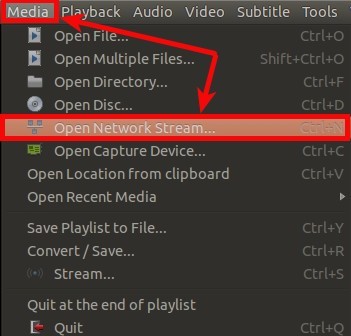
Paste your copied file URL into the network URL field and press Enter or click Play.
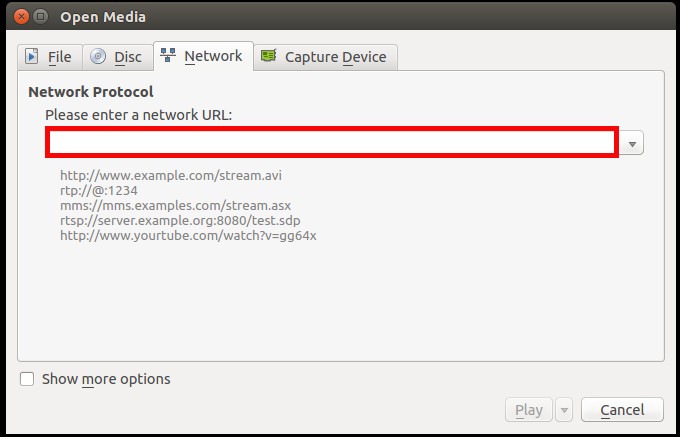
If VLC asks for login details, enter your service username and password.
After authentication, VLC should start streaming the file.
VLC Proxy Configuration
If you use our proxy server to improve HTTP or FTP download speed, you can configure VLC to use the proxy as well.
Open VLC preferences using one of the following methods:
- Press Ctrl + P.
- Or go to Tools → Preferences.
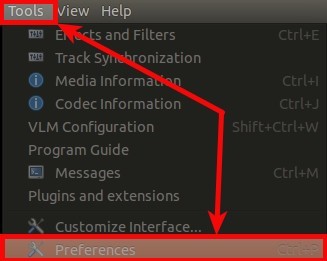
In the preferences window:
- Select All to show advanced settings.
- From the left menu, open Input / Codecs.
- Find the SOCKS proxy configuration.
- In the SOCKS server field, enter your proxy server in the following format:
hostname:port
For example:
proxyserver.seedhost.eu:3333
Save the configuration.
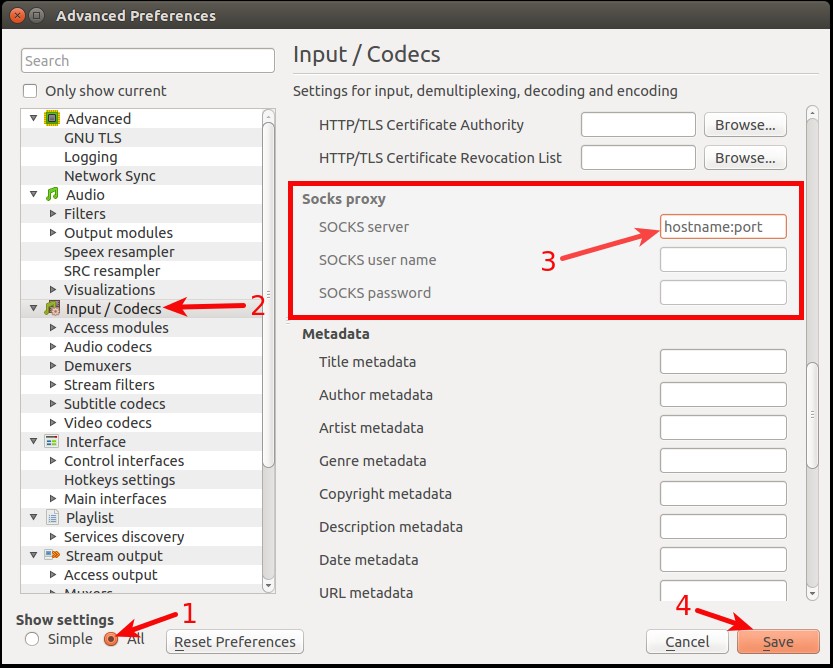
After saving the settings, VLC streaming will use the configured proxy server.
Verification
If VLC opens the file and starts playback, streaming from your service is working correctly.
If streaming does not start, check that the copied URL is correct and that your service username and password are entered correctly when VLC asks for authentication.